

NTSB of the Week
Date: January 29, 2026 | Location: Floral City, Florida | Aircraft: Bell 47G-3B | Local Registration: N347BH | Accident Number: ERA26LA100
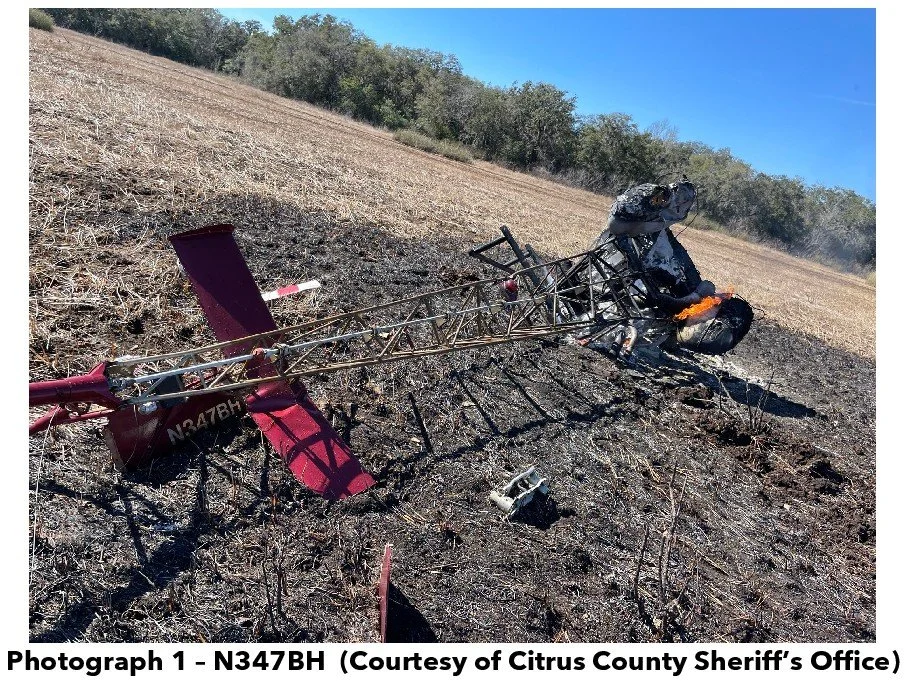
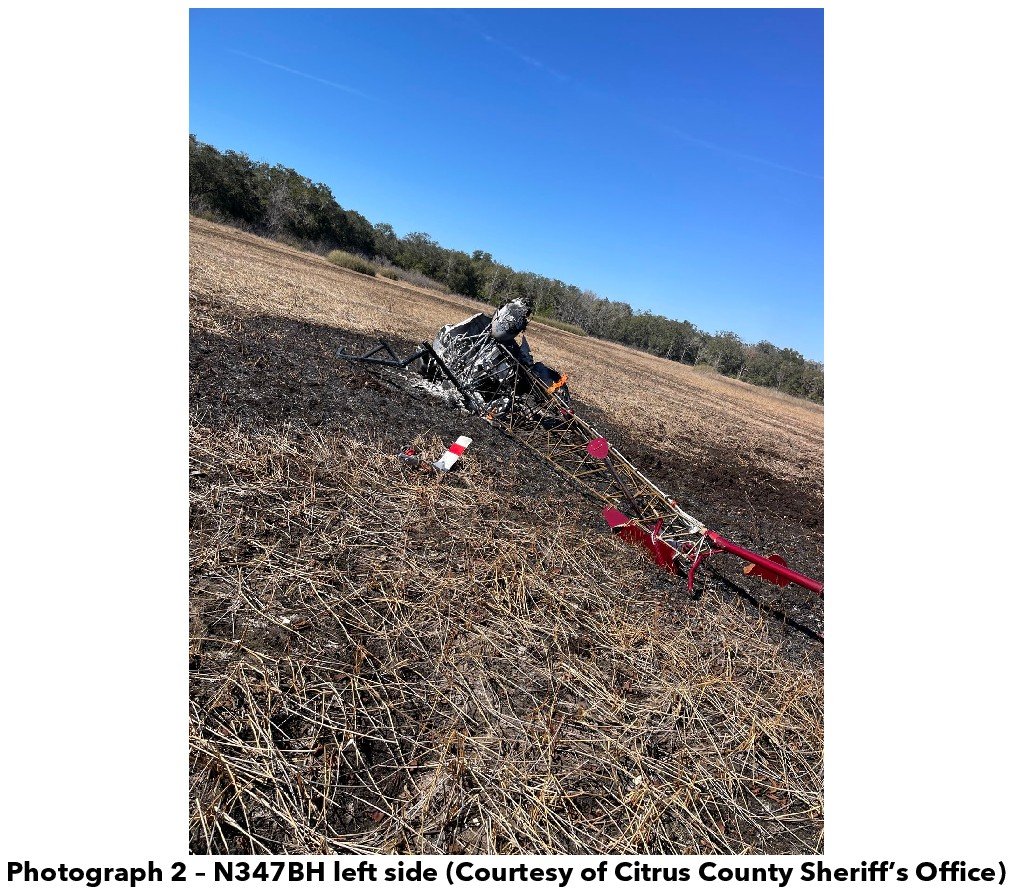
On January 29, 2026, a Bell 47G-3B, N347BH, was destroyed when it was involved in an accident near Floral City, Florida. The student pilot was not injured.
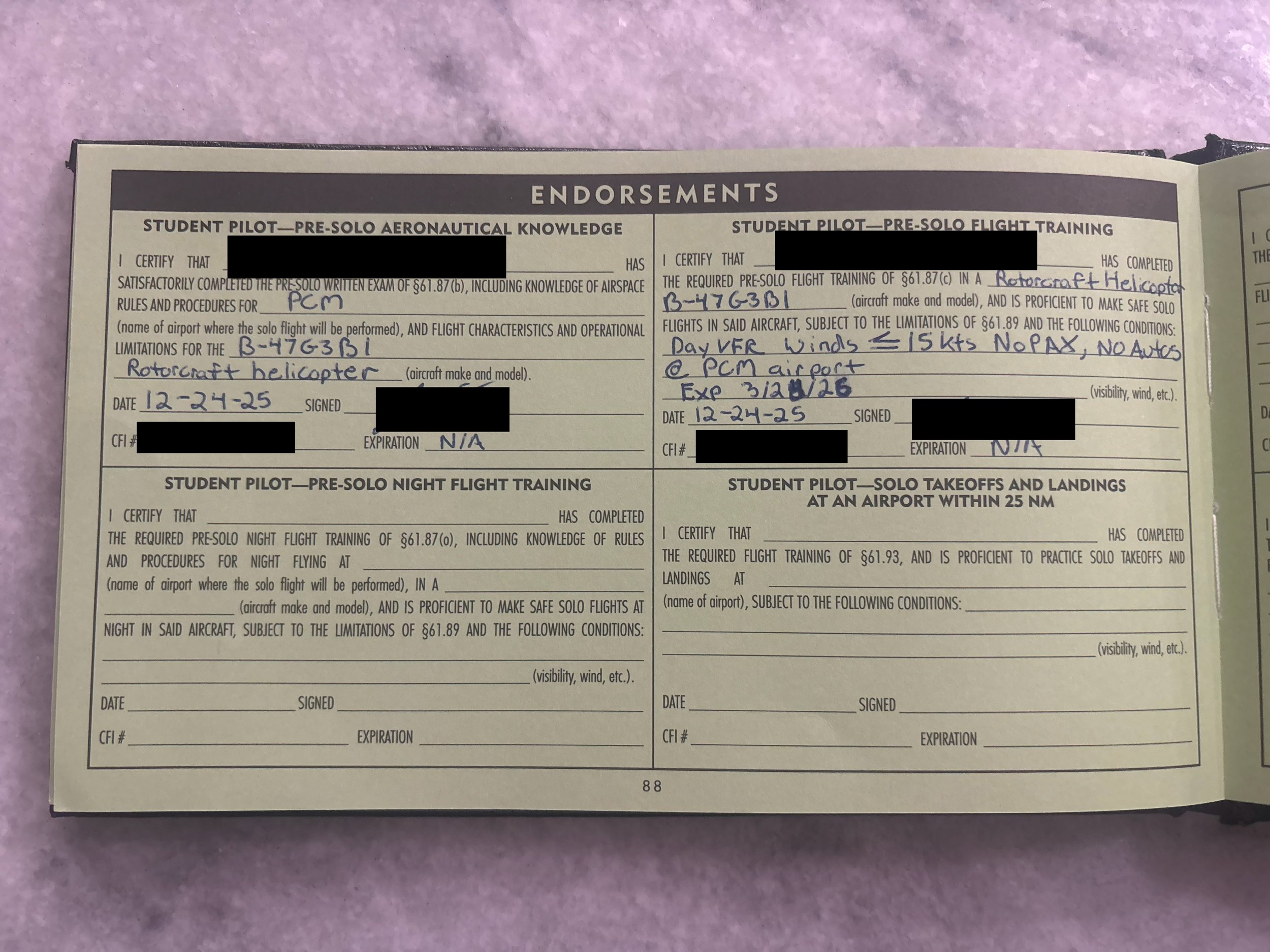
During a solo flight, the student pilot (with 32.8 hours total time) set up an approach to an off-airport landing area. The pilot stated that after he initiated the flare, he applied left anti-torque pedal in preparation for landing. The pilot thought that a gust of wind caught the helicopter’s tail rotor, after which he lost control of the helicopter, which subsequently impacted the terrain.
The helicopter was destroyed by a postimpact fire. The pilot reported that there were no preaccident mechanical malfunctions or failures with the helicopter that would have precluded normal operation.
Probable Cause and Findings
The National Transportation Safety Board determines the probable cause(s) of this accident to be: The student pilot’s loss of helicopter control during landing.
Check back weekly for new reports!