
Getting Started
Finding a Flight School
-
AOPA’s Flight School Finder is an online directory that lets you search by state, zip code, within a radius from that location, or the school’s name.
Scholarships
-
AOPA Flight Training Scholarships can be used for flight training expenses in pursuit of a primary pilot certificate or advanced rating. In 2019, AOPA gave away more than $1 million in scholarships to high school students, teachers, and adults in flight training.
-
Are you interested in pursuing flight or a career in aviation or an aviation-related field? We encourage well-rounded individuals who are involved in their school or community and interested in the world of aviation to apply for an EAA scholarship.
-
Whirly-Girls International is a nonprofit, educational and charitable organization dedicated to advancing women in helicopter aviation.
Medical Certificate
-
A step by step guide on how to get a Medical Certificate and what to expect during the AME examination.
-
The FAA MedXPress system allows anyone requesting an FAA Medical Clearance or Medical Certificate to electronically complete an application.
-
Search for an Aviation Medical Examiner (AME) in your area. This tool provides an up-to-date listing of AMEs, based on search criteria you select.
Student Pilot Certificate
Student Pilot Gear
-
Choosing the right helicopter headset is crucial for both comfort and communication. Whether you’re a student pilot or a seasoned pilot, here’s a breakdown of the best helicopter headsets on the market today.
-
It’s no secret of the importance of a logbook— it’s more than just a record of flight hours, it’s a tool for tracking progress, preparing for checkrides, and ensuring compliance with FAA regulations. Here’s the logbook I continue to use as a flight instructor, and recommend to my students.
-
As a flight instructor, I recommend kneeboards very early on. They’re great for holding the start-up checklist hands-free, having paper to write frequencies/manifold pressure limits, and eventually holding your iPad during instrument training.
-
The Helicopter Flying Handbook is designed as a technical manual for applicants who are preparing for their private, commercial, or flight instructor pilot certificates with a helicopter class rating.
-
From essential flight gear to study materials, being well-equipped lets you focus on learning, not scrambling for equipment.
Flight Training
Lesson Plans & Ground School
-
Save time and streamline your flight instruction with our comprehensive, ready-to-use Powerpoint lesson plan bundle, designed specifically for helicopter students in Private, Commercial, or CFI.
-
At H.O.G.S, we turn the complex into comprehensible. Our engaging online ground school courses provide you with the expert knowledge and confidence you need to pass your tests and ensure that you fly safely.
-
With this Online Private Pilot Helicopter Get It All Kit, you will be fully prepared for each flying lesson.
SFAR 73
-
Special Federal Aviation Regulation No. 73—Robinson Helicopter Company, Robinson R-22/R-44 Special Training and Experience Requirements.
-
This video details the required ground training before a pilot can manipulate the flight controls of an R22 or R44 helicopter.
-
Robinson SFAR 73 Information & Training Aids, by Gyronimo Training Systems.
-
Learn about all the changes to SFAR 73 (effective August 22nd, 2024) affecting Robinson R22 and R44 helicopters.
Preflight
-
The Ultimate Preflight Guide is your comprehensive manual for conducting a thorough and efficient preflight inspection of the Robinson R22 helicopter. Downloadable as a PDF, it includes images illustrating each step and safety Tips using NTSB accident reports
-
USHST Helicopter Preflight, Final Walk Around and Postflight Inspection Guidelines.
-
Photos and videos of issues found during aircraft preflight inspections, submitted by the aviation community and shared for education and awareness.
Systems, Components, & Instruments
-
From the Helicopter Flying Handbook, this chapter discusses the components, sections, and systems found on most modern helicopters.
-
The pilot operating handbook for the Robinson R22.
-
The maintenance manual and instructions for continued airworthiness for the Robinson R22.
-
This category will cover Helicopter Systems from flight controls, rotor types, engines, etc. The emphasis will be on systems that apply to Pre-Solo and Private Pilots in the Robinson R22 and R44 helicopters.
-
Easily practice basic navigation on your browser. The HSI (Horizontal Situation Indicator) Simulator was designed to demonstrate the approximate indication that an HSI instrument would display with varying positions of an aircraft in relation to VOR type radio navigational (NAVAID) facilities.
Aerodynamics
-
From the Helicopter Flying Handbook, this chapter presents aerodynamic fundamentals and principles as they apply to helicopters.
-
This section will cover Helicopter Aerodynamics from the basics of “What is an Airfoil?” all the way up to the changing aerodynamics of autorotations. Most of the topics covered apply to all helicopters, but with extra emphasis on the Robinson R22 and R44 helicopters.
Weight & Balance
-
From the Helicopter Flying Handbook, this chapter focuses on the weight and balance principles established for helicopters.
-
The weight and balance section from the Robinson R22 Pilot Operating Handbook.
-
Gyronimo provides the most advanced performance and weight & balance software available for helicopters and fixed-wing aircraft.
Performance
-
From the Helicopter Flying Handbook, this chapter focuses on helicopter performance and the factors that affect it.
-
This leaflet was developed by the European Helicopter Safety Implementation Team (EHSIT), the aim of this leaflet is to examine the factors affecting aircraft performance and provide guidance to help pilots ensure that a proposed operation can be safely accomplished.
-
An article published in Vertical Magazine that dives into understanding helicopter performance.
-
Gyronimo provides the most advanced performance and weight & balance software available for helicopters and fixed-wing aircraft.
Maneuvers
-
From the Helicopter Flying Handbook, this chapter presents basic flight maneuvers.
-
From the Helicopter Flying Handbook, this chapter presents advanced flight maneuvers.
-
The Ultimate Maneuver Guide is the ultimate tool for helicopter pilots during initial training, checkride prep, or maneuver review. This guide covers takeoffs, landings, autorotations, off-airports, and more!
-
This category covers Helicopter Flight Maneuvers at the Private and Commercial level with a few extras at the end. The videos below are unedited footage from inside the cockpit during these maneuvers.
-
From the United States Helicopter Safety Team (USHST) - The purpose of this Airmanship Bulletin is to provide specific techniques and procedures to enhance full touchdown autorotation training and safety.
ADM & Risk Management
-
From the Pilot's Handbook of Aeronautical Knowledge, this chapter presents Aeronautical decision-making (ADM).
-
Suggested training scenarios based upon factual data harvested from recent US fatal helicopter accidents by the United States Helicopter Safety Team (USHST) Safety Analysis Team (SAT).
Airspace & Charts
-
From the Pilot's Handbook of Aeronautical Knowledge, this chapter presents airspace.
-
Sectional Aeronautical Charts are the primary navigational reference medium used by the VFR pilot community.
-
Terminal Area Charts (TACs) provide a large-scale portrayal of selected metropolitan complexes to satisfy pilotage and local control requirements.
-
Helicopter Route Charts are three-color charts that depict current aeronautical information useful to helicopter pilots navigating in areas with high concentrations of helicopter activity.
-
IFR Enroute Low Altitude Charts provide aeronautical information for navigation under instrument flight rules below 18,000 feet MSL.
-
The TPPs contain Instrument Approach Procedure charts (IAP), Departure Procedure charts (DP), Standard Terminal Arrival charts (STAR), and Airport Diagrams (AD).
-
The Chart Supplement is a series of civil/military flight information publications issued by FAA every 56 days consisting of the Chart Supplement U.S., Chart Supplement Alaska, and Chart Supplement Pacific.
-
Founded in 2006, SkyVector is the premier provider of world-wide aeronautical charts, online mapping and related flight planning products and services.
Airport Operations
-
Airport operations from the Aeronautical Information Manual.
-
Standard Operating Procedures – Rotary Wing from the National Business Aviation Association.
-
A guide of the airport pavement markings and signs that provide information that is useful to a pilot during takeoff, landing, and taxiing.
Radio Communications
-
The International Civil Aviation Organization (ICAO) phonetic alphabet is used in aviation communications to ensure clear understanding of critical information, such as call signs.
-
The Pilot-Friendly Manual for VFR Communications teaches you exactly what to say, when—in every kind of VFR flight situation. Use it to master radio communications as a whole, or as a quick reference guide!
-
The manual includes scripts of the most common, most useful, and most critical IFR radio communications, with examples of what ATC and the pilot say and where they are when they say it!
-
LiveATC provides live air traffic control (ATC) broadcasts from air traffic control towers and radar facilities around the world.
Regulations
-
The Federal Aviation Regulations (FARs) are rules prescribed by the Federal Aviation Administration (FAA) governing all aviation activities in the United States.
-
The Aeronautical Information Manual is the official guide to basic flight information and ATC procedures for the aviation community.
-
A quick link page to the Federal Aviation Regulations (FARs).
-
This database consists of legal interpretations issued from 1990 to the present.
Aeromedical
-
From the Pilot's Handbook of Aeronautical Knowledge, this chapter provides information on medical certification and on a variety of aeromedical factors related to flight activities.
-
AOPA has developed a suite of online resources for pilots and physicians to help you make the most of BasicMed and enjoy your freedom to fly.
-
FAA OVER-THE-COUNTER (OTC) MEDICATIONS REFERENCE GUIDE: What OTC Medications Can I Take and Still Be Safe to Fly?
-
Which Way is Up? Exploring Spatial Disorientation in Helicopters by the United States Helicopter Safety Team (USHST).
Weather
-
Web site of the NWS Aviation Weather Center, delivering consistent, timely and accurate weather information for the world airspace system.
-
The Aviation Weather Handbook is the latest official FAA guide, covering all aspects of aviation weather, from theory and hazards (thunderstorms, turbulence, windshear) to flight planning tools (METAR, TAF, AIRMETs).
-
1800WXBRIEF (1-800-992-7433) is the official U.S. Flight Service (FSS) telephone number and website (1800wxbrief.com) for general aviation pilots to get preflight and in-flight weather briefings, file flight plans, and receive aeronautical information for safe flight operations.
-
The FAA Weather Camera Program features an expanding network of hundreds of camera sites in Alaska, the CONUS, and Hawaii and over 175 sites hosted by NAV Canada, Canada's civil air navigation service provider. Weather cameras provide pilots in certain areas with snapshots of current conditions at a specific location, enabling pilots to have additional information for improved decision‐making.
-
MoonCalc shows the motion of the moon and moon phase for a particular day at a particular location.
Cross Country & Flight Planning
-
E6BX E6B Flight Computer puts a full set of pilot-friendly tools in your pocket. It turns tricky flight math, weather codes, and procedures into clear visuals and quick answers.
-
ForeFlight is an integrated flight app on iPad, iPhone, and the web. Flight planning, aviation weather, maps and charts.
-
Garmin Pilot is the most comprehensive suite of tools for the iPad designed specifically for general aviation and corporate pilots.
FAA Knowledge Test
-
View a list of Knowledge Testing Centers available and schedule your test.
-
The following sample questions for Private Pilot-Helicopter (PRH) are suitable study material for the Private Pilot-Helicopter Rating. These questions are a representation of questions that can be found on all Private Pilot-Helicopter Rating tests.
-
Up-to-date questions maintained by a team of professional instructors, fast no-nonsense user experience, superior explanations, free lifetime updates, legendary customer service, reasonable pricing, and the proven results and loyal support of people like you have made us the #1 FAA Test prep provider, nationwide.
-
Sheppard Air provides professional-grade, accurate study courses updated 24 hours a day, 365 days a year by pilots, for pilots.
FAA Practical Test
-
A link to all Airman Certification Standards (ACS) that: communicate the aeronautical knowledge, risk management, and flight proficiency standards for certification in the Rotorcraft Category Helicopter Rating.
-
Search for a Designated Pilot Examiner (DPE) in your area. This tool provides an up-to-date listing of DPEs, based on search criteria you select.

Advanced Training
Factory Training
-
The R66 Transition Training Course is designed to ensure pilots are qualified to operate the aircraft with the utmost efficiency and safety. This comprehensive program covers all essential aspects of the specific aircraft's systems. Pilots will receive detailed instructions on operating procedures, performance characteristics, normal and emergency procedures.
-
The HeliSAS Autopilot Equipment Course is structured to provide pilots with an in-depth understanding of this system, ensuring its efficient and safe operation. Over the course of the program, pilots will gain comprehensive knowledge of the various components and functionalities of the HeliSAS autopilotsystem. Attendees will learn best practices for operating this system under various flight conditions, troubleshooting common issues, and understanding the limitations and capabilities of the technology.
-
The Post-Maintenance Procedures Course is designed to equip pilots with the essential knowledge and skills needed to safely and effectively conduct post-maintenance flights. The curriculum will cover detailed procedures to ensure aircraft readiness following maintenance, beginning with an in-depth examination of the manufacturer’s checklist. This includes understanding each item on the checklist, its significance, and the correct method to verify each step. The course will also delve into case studies of previous accidents related to post-maintenance activities, analyzing the causes and identifying preventative measures.
-
The Robinson Helicopter Company's Pilot Safety Course is dedicated to elevating pilot safety awareness through comprehensive education and training. Tailored for R22, R44, and R66 helicopters, this course emphasizes adherence to aircraft guidelines and aviation standards. While not a transition course for a specific make or model, the curriculum is designed to deepen pilots' aeronautical decision-making abilities by addressing safety-related topics such as accident causes, prevention techniques, emergency procedures, and FAA regulations. The curriculum also explores human factors, ensuring comprehensive training to enhance overall flight safety.
Participants will delve into key areas such as identifying major causes of helicopter accidents, understanding their origins, and learning effective prevention strategies. The course covers essential sections of the Pilot's Operating Handbook, including limitations, emergency procedures, performance guidelines, and relevant FAA regulations. Throughout, special attention is given to human factors, ensuring a comprehensive approach to safety throughout the training program.
-
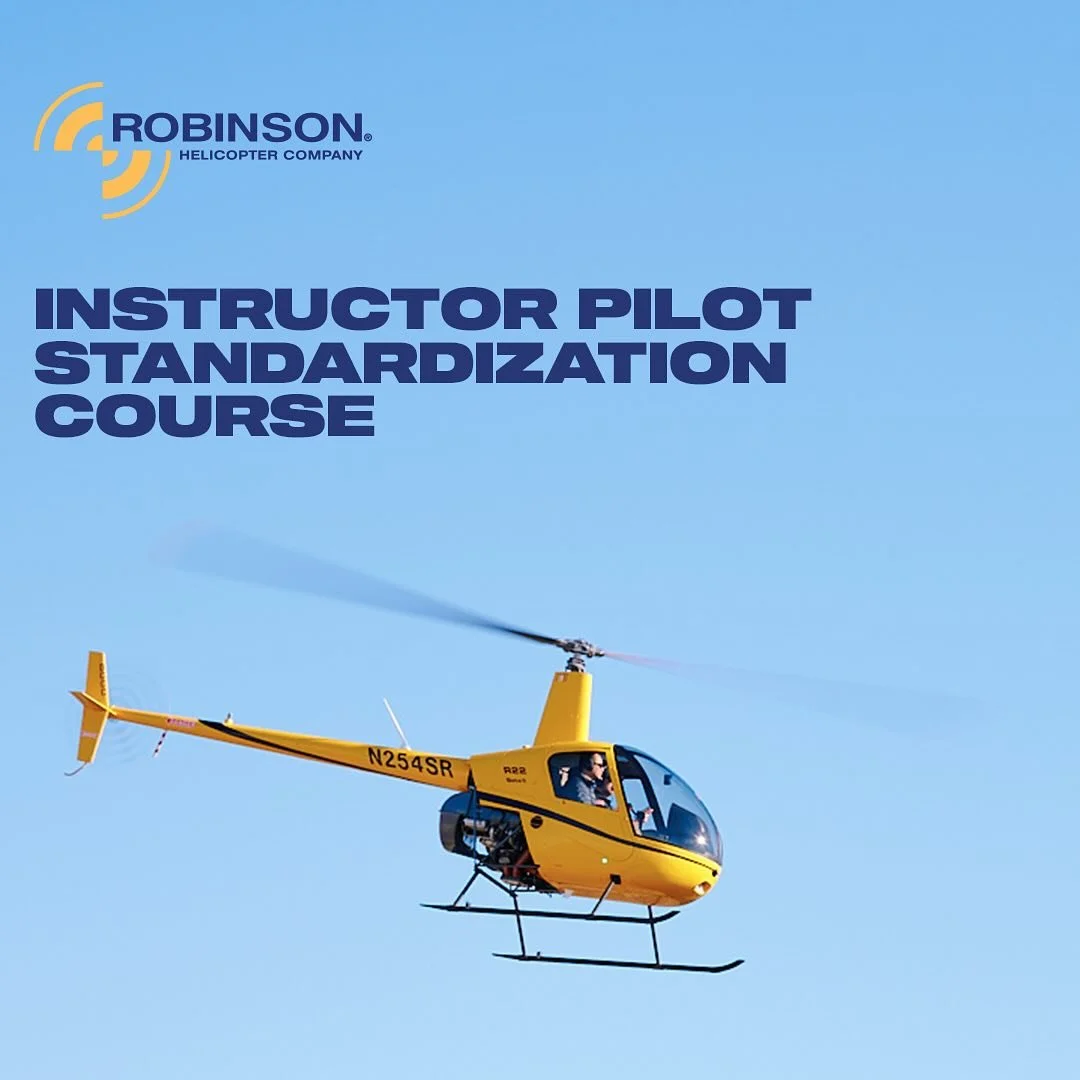
The Robinson Instructor Pilot Standardization Course exemplifies Robinson's enduring dedication tohelicopter training safety. This comprehensive program is designed to elevate helicopter flight trainingby equipping instructors with essential skills and knowledge to develop highly proficient pilots. Building on the expertise gained from its esteemed Safety Course, conducted for over 40 years, Robinson’s Instructor Pilot course continues to advance the standards of aviation training.
The course aims to elevate safety standards by implementing standardized teaching methods and techniques. It provides a thorough review of SFAR 73 awareness training and flight training requirements, along with an in-depth analysis of the major causes of accidents, including those that occur during training. The curriculum emphasizes the impact of human factors on training accidents. The flight training component standardizes instructional methods for SFAR 73 flight training requirements, covering autorotation, power failures, low RPM recognition and recovery, and RPM control without using the governor.
-
The Robinson Helicopter Company Maintenance Course is an essential training program for those involved in the maintenance and repair of Robinson helicopters, ensuring high standards of safety, efficiency, and regulatory compliance. It provides aviation mechanics and technicians on the proper maintenance, repair, and overhaul of R22, R44, and R66 helicopters. It covers essential topics such asinspection protocols, troubleshooting techniques, and repair procedures specific to Robinson the R22, R44, and R66. Participants in the course gain hands-on experience and theoretical knowledge under the guidance of experienced instructors. The goal is to ensure that maintenance personnel are well-equipped to perform their duties effectively, adhere to safety standards, and maintain the reliability and airworthiness of Robinson helicopters. This training is crucial for maintaining operational excellence and safety in the aviation industry.
-
Train at the Bell Training Academy, where those that built your aircraft offer a blend of innovative educational platforms. Learn safe flying and maintenance through our advanced 3-D courseware, simulators, full touchdown autorotation, and hands-on training.
Beyond Factory Training
-
Helicopter Institute provides an alternative through our Beyond Factory Training initiative with flexible scheduling and budget friendly pricing without compromising on quality!
-
Volo Mission provides comprehensive long line training for diverse operations requiring skilled and qualified vertical reference/long line pilots and ground crews.
-
Become more proficient in emergency procedures, aircraft systems failures and advanced autorotation skills. Our enhanced safety training will improve your flight skills to make you a safer and more competent pilot.
-
EuroSafety is the leading provider of airframe safety training for Airbus, Leonardo & Bell helicopters. We offer initial, advanced & recurrent training.
Accident Reports
Database
-
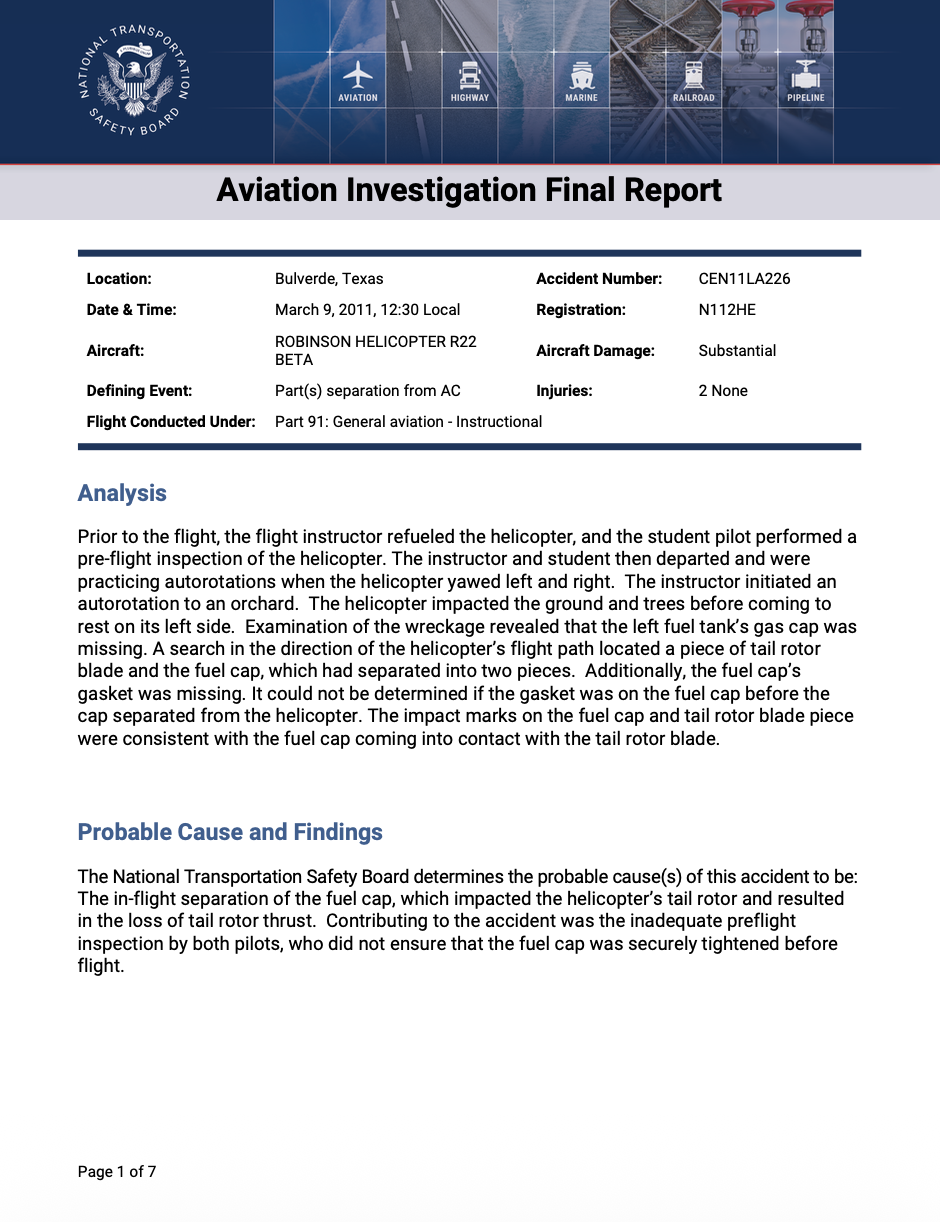
The NTSB aviation accident database contains civil aviation accidents and selected incidents that occurred from 1962 to present within the United States, its territories and possessions, and in international waters. Foreign investigations in which the NTSB participated as an accredited representative will also be listed.
-
Aviation Safety Network - The resource centre for aircraft accidents and civil aviation safety issues.
-
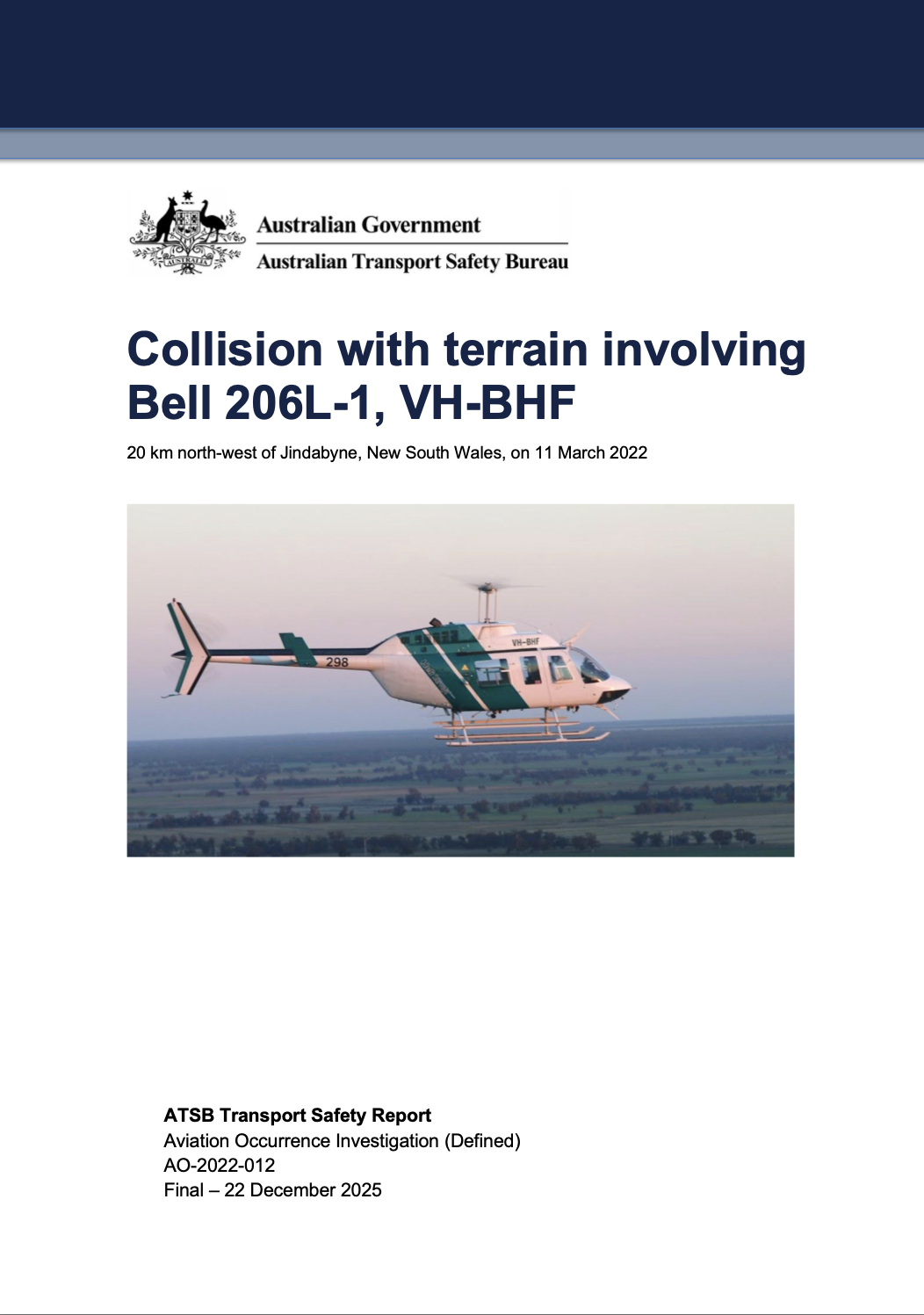
View Heli Preflight's NTSB Accident Review of the Week and the final report - providing insight into key takeaways that can increase aviation and flight training safety.
Statistics
-
Comprehensive U.S. helicopter accident report data, by the U.S. Helicopter Safety Team.
Safety Updates
ADs, SBs, & Safety Notices
-
Search the FAA’s database of Airworthiness Directives (ADs).
-
Search the FAA’s database of Special Airworthiness Information Bulletins (SAIB).
-
From the FAA Safety Team - Manufacturers issue aircraft Service Bulletins to inform owners and operators about critical and useful information on aircraft safety, maintenance, or product improvement. Compliance with Service Bulletins may or may not be mandatory, but you should never ignore them when it comes to safety.
-
Keep up to date with the latest Robinson safety notices.
-
Keep up to date with the latest Bell bulletins and safety notices.
-
Enstrom Helicopter Corporation publishes a "Safety Check" series on its blog, covering topics such as winter flying, rotor RPM management, pilot judgment, and preflight procedures.
-
An online collection of airworthiness information, including Airworthiness Directives (ADs), Proposed ADs (PADs), and Safety Information Bulletins (SIBs).
Information Updates
-
This Information for Operators (InFO) provides information to helicopter operators, including flight schools and flight training facilities, about bird strike hazards.
-
This Information for Operators (InFO) serves to recommend Spatial Disorientation (SD) training for Parts 91, 91 subpart K (91K), and 135 operations.
-
Pilots, particularly those with considerable experience, try to complete a flight as planned, please passengers, meet schedules and generally demonstrate the "right stuff." This basic drive can have an adverse effect on safety and can impose an unrealistic assessment of piloting skills under stressful situations. Even worse, repetitive patterns of behavior based on unrealistic assessments can produce piloting practices that are dangerous, often illegal, and will ultimately lead to mishaps. Here are 12 of these possibly dangerous tendencies or behavior patterns.
-
From the International Helicopter Safety Team (IHST) - A pilot’s immediate actions after encountering inadvertent IMC usually will determine the outcome of the entire event. Pilots who possess a plan of action prior to encountering it are more likely to experience a successful outcome (staying alive) than those who are less trained and less proficient in the recognition and recovery procedures.
-
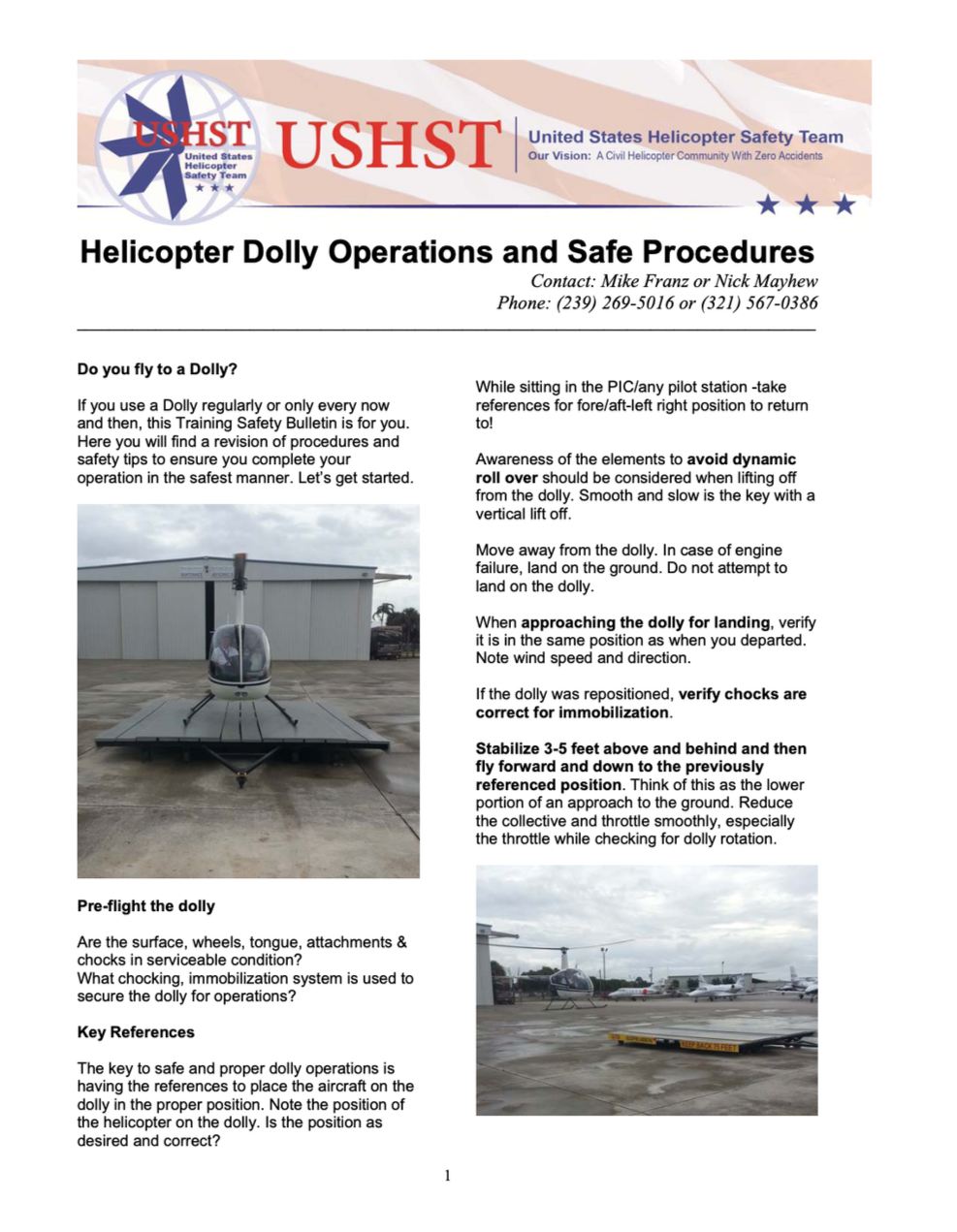
From the US Helicopter Safety Team (USHST) - If you use a Dolly regularly or only every now and then, this Training Safety Bulletin is for you. Here you will find a revision of procedures and safety tips to ensure you complete your operation in the safest manner.
-
The Helicopter Association International (HAI) recently launched the “Land and Live” program. The Precautionary Landings Safety Bulletin is designed to support this initiative by offering suggestions on how training sessions can be designed to assist helicopter pilots in making decisions to discontinue a flight when conditions start to deteriorate.
-
The following guidelines and recommended practices for a helicopter preflight inspection, a final walk around, and a post-flight inspection were developed by the U.S. Helicopter Safety Team for the pilot community and all instructors. These are a dozen actions you cannot forget.
-
After analyzing dozens of helicopter accidents that resulted in fatalities for pilots and passengers, the U.S. Helicopter Safety Team has uncovered six focus areas where flight instructors can improve safety in the helicopter industry. The facts show that failure in these areas has resulted in lives being lost.
-
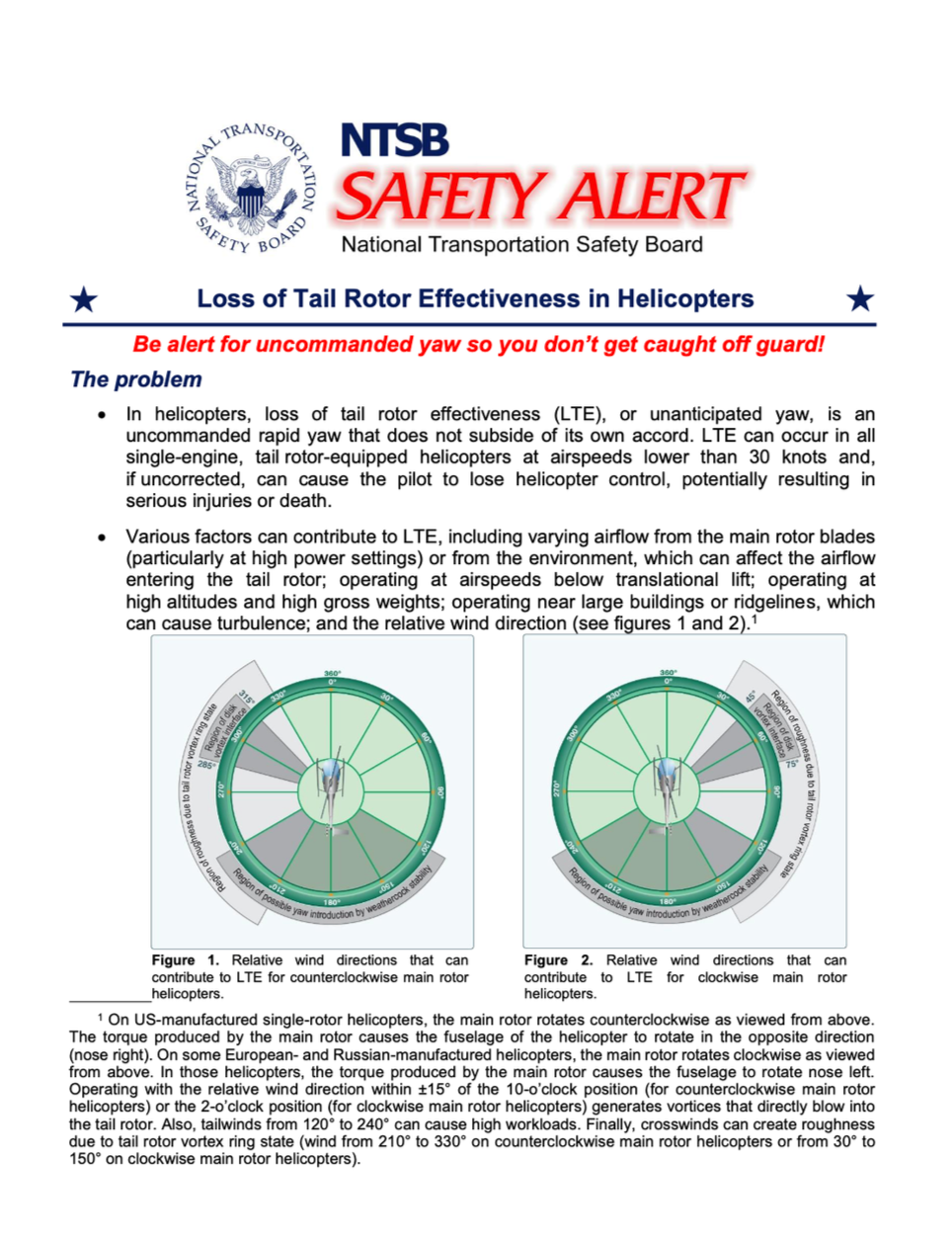
From the US Helicopter Safety Team (USHST) - Loss of Tail Rotor Effectiveness in Helicopters. Be alert for uncommanded yaw so you don’t get caught off guard!

Entertainment
News
-
AOPA protects your freedom to fly, helps keep our airspace safe, and enhances your aviation journey with access to unique products, services and benefits.
-
The world's largest helicopter magazine, dedicated to spectacular photography and reporting from the field.
-
Get the latest aviation news, pilot resources, aircraft reviews, and more from FLYING Magazine — trusted by aviators since 1927.
-
HeliOps Magazine delivers global helicopter industry news, insights, and features.
-
Since 2001 the goal of the Rotor Pro Media Network is to inform, educate and entertain the working professionals in the helicopter industry.
-
Helicopters magazine is Canada’s only national helicopter magazine, providing comprehensive coverage of commercial, corporate, general and military rotary-wing aviation in Canada and around the world.
-
Since 1949, General Aviation News has been bringing information about the world of general aviation to our subscribers.
-
Aviation International News is the industry's best read and most authoritative news publication, covering all aspects of aviation.
Podcasts
-
Vertical HeliCASTS is the best place to listen to the captivating stories that shape the rotorcraft industry.
-
Hosted by RH, a current airline pilot and former controller, and AG, a current controller and retired Army pilot, Opposing Bases brings real-world aviation experience to the mic every week. Together, they break down airspace procedures, pilot-controller communication, and real-world aviation scenarios with unmatched credibility—and a healthy dose of humor.
-
Welcome to Aviation News Talk! Our podcast focuses on General Aviation news, general tips for pilots, technical details on glass cockpits and flying GPS approaches, and an occasional interview. We also answer listener questions. I bring my more than 40 years of piloting experience to the show to help teach pilots and future pilots to fly safely.
-
The Hangar Z Podcast interviews dive deep into the individuals who play crucial roles within the public safety aviation community. Our episodes feature insightful conversations with pilots, tactical flight officers, and the indispensable aircraft maintenance technicians who form the backbone of aviation unit operations.
-
Welcome to The Helicopter Podcast, with your host Halsey Schider! This podcast is for helicopter pilots, maintainers, and enthusiasts! Whether you've been in the industry for 30 years or are just someone that loves helicopters, this podcast is for you! The podcasts will feature guests from a wide array of industry sectors to have casual conversation, answer questions, give sound advice, and talk shop. Finally, a podcast produced by helicopter professionals for all types of helicopter people!
-
Welcome to Helicopter Training Podcast, where helicopter enthusiasts, student pilots, and instructors can tune in for insightful discussions on all things helicopter training. Hosted by Jay, a seasoned helicopter pilot and instructor, this podcast dives deep into the fundamentals of flight training, including aircraft systems, emergency procedures, aerodynamics, regulations, and flight maneuvers. Each episode is packed with practical tips on staying safe in the sky, lessons on what to watch out for, and real stories from both instructors and students. You’ll also hear expert advice on handling training challenges in flight training and stories from the cockpit that bring the lessons to life.
Pilot Support
-
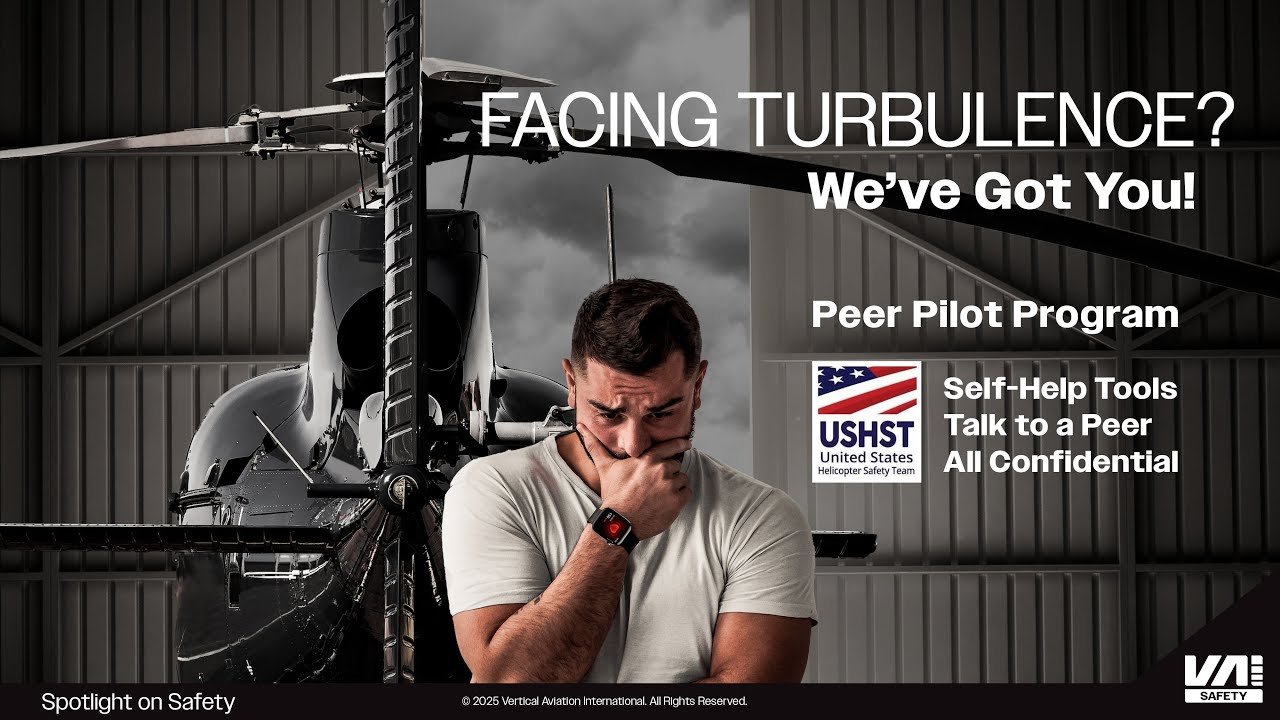
The US Helicopter Safety Team’s (USHST) Peer Pilot Program (PPP) is a volunteer peer-based program where a helicopter pilot dealing with a personal or professional issue can consult with an industry peer volunteer about non-life-threatening mental well-being concerns. The volunteers are experienced colleagues who understand the helicopter profession and identify with the pressures and risks—both real and perceived—that helicopter pilots and crew face. They possess a deep desire to assist colleagues going through difficult times. The peer pilots are non-judgmental, with access to a wide variety of resources that can direct a pilot in distress to more advanced or appropriate care if needed. Peer volunteers receive professional training and undergo regular assessments on how to handle a variety of scenarios, and they can listen and respond with empathy and compassion. They are supervised by an appointed mental health professional, and all parties involved maintain confidentiality to protect the privacy of those seeking help. The service is completely free.
-
The Flight Crew Assistance & Support Team (FAST) is an immediate & long-term peer support team that will provide emergency assistance to flight crew members & families in need who have been involved in a crash or significant incident. We aim to evolve in providing help with physical, emotional, & social needs that arise, as well as helping with day-to-day issues that may present following an incident.
-
The foremost technical resources available to AOPA Members. The Pilot Information Center strives to maintain the highest standards of professionalism and technical expertise.